Project Type
Living Learning Project
Personal Learning Project
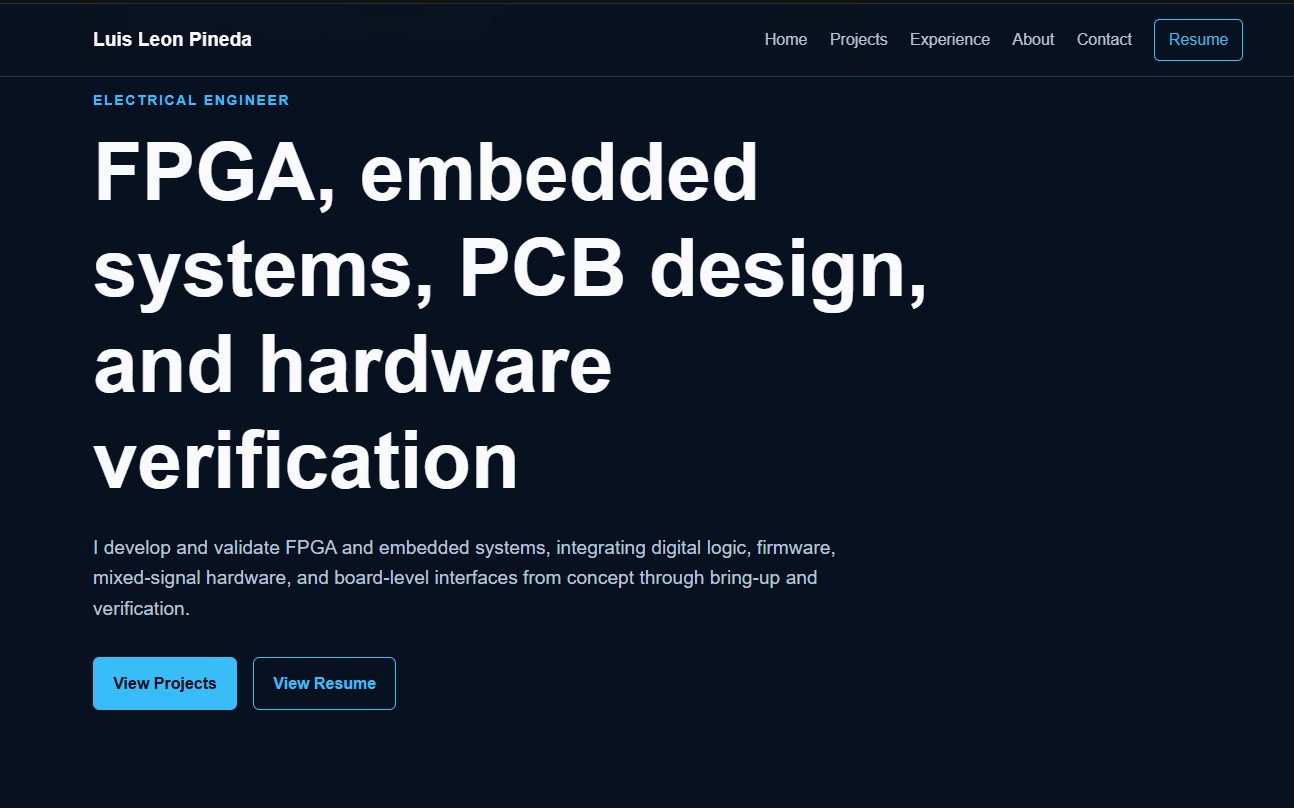
This website is both my engineering portfolio and a hands-on learning environment where I practice using AI, VS Code, Astro, Git, and GitHub Pages to turn technical work into clear, accessible project stories.
Project Type
Living Learning Project
Framework
Astro
Development
VS Code and AI
Deployment
GitHub Pages
Overview
I started this website to create a permanent home for my engineering work. Instead of treating it as a one-time portfolio assignment, I am using it as an ongoing way to learn modern development tools and improve how I communicate technical projects.
Every improvement gives me a practical problem to solve: organizing Astro pages, understanding shared layouts, writing responsive CSS, managing images and documents, fixing links, improving metadata, and validating a production build before publishing it.
Learning Process
Start with a concrete page, content, layout, or debugging problem and describe the intended result in plain language.
Use AI inside the development workflow to inspect the repository, explain unfamiliar code, suggest changes, and implement focused updates.
Read the Astro, HTML, and CSS changes in VS Code to understand what changed, where it is used, and how it affects the page.
Run a production build, inspect the rendered result, identify problems, and repeat the process with smaller improvements.
AI as a Development Tool
I use AI as a collaborative tool for exploring the codebase, explaining unfamiliar syntax, locating the source of a visual issue, drafting content, and implementing focused changes. This makes it possible to move from an idea to a working result quickly.
The important part of the process is reviewing the result. I compare the change with the original request, inspect the affected files, run the Astro build, and continue refining anything that does not match the intended design or message.
Technical Foundation
File-based routes provide the home, about, experience, contact, project index, and detailed project pages.
A common layout, header, footer, and project-card component keep navigation and repeated content consistent.
Organized design tokens, responsive grids, project layouts, cards, galleries, and mobile breakpoints define the visual system.
Astro generates static HTML that GitHub Pages can serve directly from the public portfolio URL.
Work Completed
Reflection
This project is teaching me that effective AI-assisted development is not only about generating code. It requires describing the goal, preserving context, checking assumptions, understanding file relationships, and verifying that the final result actually works.
As the site grows, I plan to keep improving its project documentation, accessibility, responsive presentation, performance, and deployment workflow while applying what I learn to new engineering projects.
Explore the Project